Make `Ipv4Addr` and `Ipv6Addr` const tests unit tests under `library`

These tests are about the standard library, not the compiler itself, thus should live in `library`, see #76268.
Implementation of incompatible features error
Proposal of a new error: Incompatible features
This error should happen if two features which are not compatible are used together.
For now the only incompatible features are `const_generics` and `min_const_generics`
fixes#76280
Allow try blocks as the argument to return expressions
Fixes#76271
I don't think this needs to be edition-aware (phew) since `return try` in 2015 is also the start of an expression, just with a struct literal instead of a block (`return try { x: 4, y: 5 }`).
Move some Vec UI tests into alloc unit tests

A bit of work towards #76268, makes a number of the Vec UI tests that are simply running code into unit tests. Ensured that they are being run when testing liballoc locally.
debuginfo:  Ignore HashMap .natvis tests before cdb 10.0.18362.1

CDB <10.0.18362.1 chokes on casts within HashMap's natvis visualizers.  This PR adds support for "min-cdb-version" (per existing "min-gdb-version" and "min-lldb-version" filters) and uses it.  CI uses a more recent version of CDB for testing and thus should still run the tests.

Credit to @petrochenkov per https://github.com/rust-lang/rust/issues/76352 for helping catch this.

### SDK Testing

| Win 10 SDK                                                             |  x64 CDB          | rustc 1.47.0-nightly (bf4342114 2020-08-25) built-in .natvis  | Note |
| --------------------------------------------------------------------- | ----------------- | ------------------------------------------------------------- | ---- |
| [10.0.19041.0](https://go.microsoft.com/fwlink/p/?linkid=2120843)     | 10.0.19041.1      | ✔️                                                            | CI
| [10.0.18362.1](https://go.microsoft.com/fwlink/?linkid=2083338)       | 10.0.18362.1      | ✔️                                                            | MaulingMonkey
| [10.0.17763.0](https://go.microsoft.com/fwlink/p/?LinkID=2033908)     | 10.0.17763.132    | ❌ `Unable to find type 'tuple<u64,u64> *' for cast.`
| [10.0.17134.12](https://go.microsoft.com/fwlink/p/?linkid=870807)     | 10.0.17134.12     | ❌ `Unable to find type 'tuple<u64,u64> *' for cast.`
| [10.0.16299.91](https://go.microsoft.com/fwlink/p/?linkid=864422)     | 10.0.16299.91     | ❌ `Unable to find type 'tuple<u64,u64> *' for cast.`
| [10.0.15063.468](https://go.microsoft.com/fwlink/p/?LinkId=845298)    | 10.0.15063.468    | ❌ `Unable to find type 'tuple<u64,u64> *' for cast.`
| [10.0.14393.795](https://go.microsoft.com/fwlink/p/?LinkId=838916)    | 10.0.14321.1024   | ❌ `Unable to find type 'tuple<u64,u64> *' for cast.` | petrochenkov
| [10.0.10586.212](https://go.microsoft.com/fwlink/p/?LinkID=698771)    | 10.0.10586.567    | ❌ `Expected ')' at '+ 1)].__1'`
| [10.0.10240](https://go.microsoft.com/fwlink/p/?LinkId=619296)        | 10.0.10240?       | ❔ Untested

### Rust Testing

```cmd
x.py test --stage 1 src/tools/tidy
x.py test --stage 1 --build x86_64-pc-windows-msvc src\test\debuginfo
```

Also verified test still fails when intentionally broken w/ CDB version >= min-cdb-version.
Account for version number in NtIdent hack

Issue #74616 tracks a backwards-compatibility hack for certain macros.
This has is implemented by hard-coding the filenames and macro names of
certain code that we want to continue to compile.

However, the initial implementation of the hack was based on the
directory structure when building the crate from its repository (e.g.
`js-sys/src/lib.rs`). When the crate is build as a dependency, it will
include a version number from the clone from the cargo registry (e.g.
`js-sys-0.3.17/src/lib.rs`), which would fail the check.

This commit modifies the backwards-compatibility hack to check that
desired crate name (`js-sys` or `time-macros-impl`) is a prefix of the
proper part of the path.

See https://github.com/rust-lang/rust/issues/76070#issuecomment-687215646
for more details.
Enable some of profiler tests on Windows-gnu

CC https://github.com/rust-lang/rust/issues/61266

Because of force-push GitHub didn't let me reopen https://github.com/rust-lang/rust/pull/75184

Because of the GCC miscompilation, generated binaries either segfault or `.profraw` is malformed. Clang works fine but we can't use it on the CI.
However we can still test the IR for the proper instrumentation so let's do it.
inliner: Check for codegen fn attributes compatibility
* Check for target features compatibility
* Check for no_sanitize attribute compatibility
Fixes#76259.
Fix intra-doc links on pub re-exports

Partial fix for https://github.com/rust-lang/rust/issues/76073 - This removes the incorrect error, but doesn't show the documentation anywhere.
r? @GuillaumeGomez
Remove disambiguators from intra doc link text

Closes https://github.com/rust-lang/rust/issues/65354.
r? @Manishearth

The commits are mostly atomic, but there might be some mix between them here and there. I recommend reading 'refactor ItemLink' and 'refactor RenderedLink' on their own though, lots of churn without any logic changes.
Add a regression test for issue-72793

Adds a regression test for #72793, which is fixed by #75443. Note that this won't close the issue as the snippet still shows ICE with `-Zmir-opt-level=2`. But it makes sense to add a test anyway.
do not apply DerefMut on union field

This implements the part of [RFC 2514](https://github.com/rust-lang/rfcs/blob/master/text/2514-union-initialization-and-drop.md) about `DerefMut`. Unlike described in the RFC, we only apply this warning specifically when doing `DerefMut` of a `ManuallyDrop` field; that is really the case we are worried about here.

@matthewjasper suggested I patch `convert_place_derefs_to_mutable` and `convert_place_op_to_mutable` for this, but I could not find anything to do in `convert_place_op_to_mutable` and this is sufficient to make the test pass. However, maybe there are some other cases this misses? I have no familiarity with this code.

This is a breaking change *in theory*, if someone used `ManuallyDrop<T>` in a union field and relied on automatic `DerefMut`. But on stable this means `T: Copy`, so the `ManuallyDrop` is rather pointless.

Cc https://github.com/rust-lang/rust/issues/55149
Upgrade Chalk to 0.21

Two commits here. First commit actually does the upgrade. Second commit has some changes to make more tests in compare-mode=chalk pass.

The `PlaceholdersCollector` and `RegionsSubstitutor` bits are bit a hacky, but only insomuch as `ParamsSubstitutor` is. These won't be needed eventually.

r? @nikomatsakis
Respect `-Z proc-macro-backtrace` flag for panics inside libproc_macro
Fixes#76270
Previously, any panic occuring during a call to a libproc_macro method
(e.g. calling `Ident::new` with an invalid identifier) would always
cause an ICE message to be printed.
Issue #74616 tracks a backwards-compatibility hack for certain macros.
This has is implemented by hard-coding the filenames and macro names of
certain code that we want to continue to compile.

However, the initial implementation of the hack was based on the
directory structure when building the crate from its repository (e.g.
`js-sys/src/lib.rs`). When the crate is build as a dependency, it will
include a version number from the clone from the cargo registry (e.g.
`js-sys-0.3.17/src/lib.rs`), which would fail the check.

This commit modifies the backwards-compatibility hack to check that
desired crate name (`js-sys` or `time-macros-impl`) is a prefix of the
proper part of the path.

See https://github.com/rust-lang/rust/issues/76070#issuecomment-687215646
for more details.
- Preserve suffixes when displaying
- Rename test file to match `intra-link*`
- Remove unnecessary .clone()s
- Improve comments and naming
- Fix more bugs and add tests
- Escape intra-doc link example in public documentation
Tools, tests, and experimenting with MIR-derived coverage counters
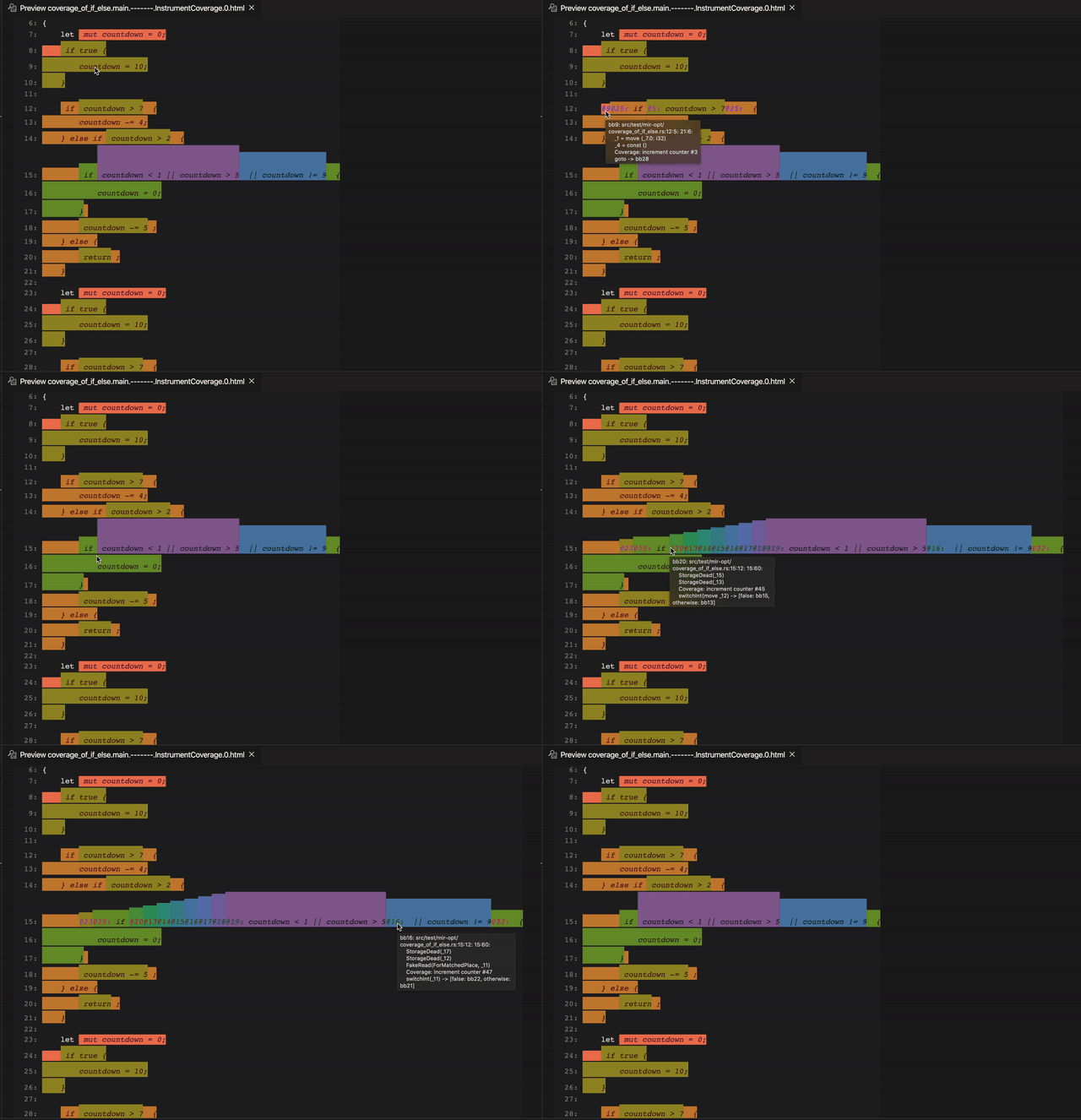
Leverages the new mir_dump output file in HTML+CSS (from #76074) to visualize coverage code regions
and the MIR features that they came from (including overlapping spans).
See example below.
The `run-make-fulldeps/instrument-coverage` test has been refactored to maximize test coverage and reduce code duplication. The new tests support testing with and without `-Clink-dead-code`, so Rust coverage can be tested on MSVC (which, currently, only works with `link-dead-code` _disabled_).
New tests validate coverage region generation and coverage reports with multiple counters per function. Starting with a simple `if-else` branch tests, coverage tests for each additional syntax type can be added by simply dropping in a new Rust sample program.
Includes a basic, MIR-block-based implementation of coverage injection,
available via `-Zexperimental-coverage`. This implementation has known
flaws and omissions, but is simple enough to validate the new tools and
tests.
The existing `-Zinstrument-coverage` option currently enables
function-level coverage only, which at least appears to generate
accurate coverage reports at that level.
Experimental coverage is not accurate at this time. When branch coverage
works as intended, the `-Zexperimental-coverage` option should be
removed.
This PR replaces the bulk of PR #75828, with the remaining parts of
that PR distributed among other separate and indentpent PRs.
This PR depends on two of those other PRs: #76002, #76003 and #76074
Rust compiler MCP rust-lang/compiler-team#278
Relevant issue: #34701 - Implement support for LLVMs code coverage
instrumentation
r? @tmandry
FYI: @wesleywiser
diagnostics: shorten paths of unique symbols

This is a step towards implementing a fix for #50310, and continuation of the discussion in [Pre-RFC: Nicer Types In Diagnostics - compiler - Rust Internals](https://internals.rust-lang.org/t/pre-rfc-nicer-types-in-diagnostics/11139). Impressed upon me from previous discussion in #21934 that an RFC for this is not needed, and I should just come up with code.

The recent improvements to `use` suggestions that I've contributed have given rise to this implementation. Contrary to previous suggestions, it's rather simple logic, and I believe it only reduces the amount of cognitive load that a developer would need when reading type errors.

-----

If a symbol name can only be imported from one place, and as long as it was not glob-imported anywhere in the current crate, we can trim its printed path to the last component.

This has wide implications on error messages with types, for example, shortening `std::vec::Vec` to just `Vec`, as long as there is no other `Vec` importable from anywhere.
specialize some collection and iterator operations to run in-place
This is a rebase and update of #66383 which was closed due inactivity.
Recent rustc changes made the compile time regressions disappear, at least for webrender-wrench. Running a stage2 compile and the rustc-perf suite takes hours on the hardware I have at the moment, so I can't do much more than that.
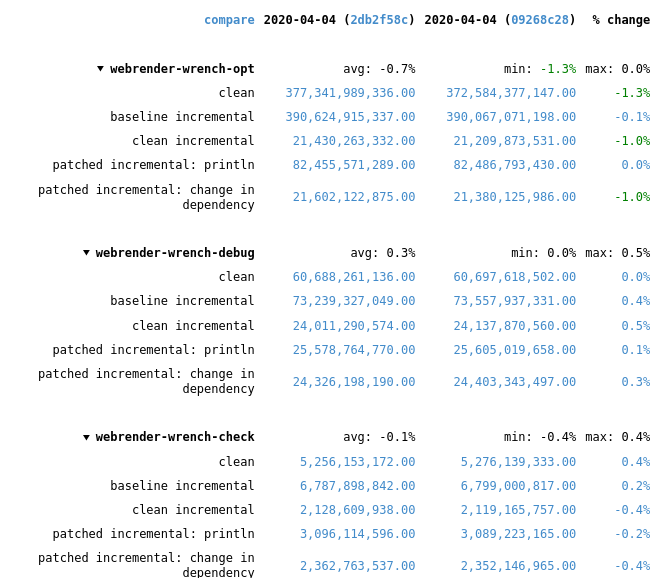
In the best case of the `vec::bench_in_place_recycle` synthetic microbenchmark these optimizations can provide a 15x speedup over the regular implementation which allocates a new vec for every benchmark iteration. [Benchmark results](https://gist.github.com/the8472/6d999b2d08a2bedf3b93f12112f96e2f). In real code the speedups are tiny, but it also depends on the allocator used, a system allocator that uses a process-wide mutex will benefit more than one with thread-local pools.
## What was changed
* `SpecExtend` which covered `from_iter` and `extend` specializations was split into separate traits
* `extend` and `from_iter` now reuse the `append_elements` if passed iterators are from slices.
* A preexisting `vec.into_iter().collect::<Vec<_>>()` optimization that passed through the original vec has been generalized further to also cover cases where the original has been partially drained.
* A chain of *Vec<T> / BinaryHeap<T> / Box<[T]>* `IntoIter`s through various iterator adapters collected into *Vec<U>* and *BinaryHeap<U>* will be performed in place as long as `T` and `U` have the same alignment and size and aren't ZSTs.
* To enable above specialization the unsafe, unstable `SourceIter` and `InPlaceIterable` traits have been added. The first allows reaching through the iterator pipeline to grab a pointer to the source memory. The latter is a marker that promises that the read pointer will advance as fast or faster than the write pointer and thus in-place operation is possible in the first place.
* `vec::IntoIter` implements `TrustedRandomAccess` for `T: Copy` to allow in-place collection when there is a `Zip` adapter in the iterator. TRA had to be made an unstable public trait to support this.
## In-place collectible adapters
* `Map`
* `MapWhile`
* `Filter`
* `FilterMap`
* `Fuse`
* `Skip`
* `SkipWhile`
* `Take`
* `TakeWhile`
* `Enumerate`
* `Zip` (left hand side only, `Copy` types only)
* `Peek`
* `Scan`
* `Inspect`
## Concerns
`vec.into_iter().filter(|_| false).collect()` will no longer return a vec with 0 capacity, instead it will return its original allocation. This avoids the cost of doing any allocation or deallocation but could lead to large allocations living longer than expected.
If that's not acceptable some resizing policy at the end of the attempted in-place collect would be necessary, which in the worst case could result in one more memcopy than the non-specialized case.
## Possible followup work
* split liballoc/vec.rs to remove `ignore-tidy-filelength`
* try to get trivial chains such as `vec.into_iter().skip(1).collect::<Vec<)>>()` to compile to a `memmove` (currently compiles to a pile of SIMD, see #69187 )
* improve up the traits so they can be reused by other crates, e.g. itertools. I think currently they're only good enough for internal use
* allow iterators sourced from a `HashSet` to be in-place collected into a `Vec`
rustdoc: do not use plain summary for trait impls
Fixes#38386.
Fixes#48332.
Fixes#49430.
Fixes#62741.
Fixes#73474.
Unfortunately this is not quite ready to go because the newly-working links trigger a bunch of linkcheck failures. The failures are tough to fix because the links are resolved relative to the implementor, which could be anywhere in the module hierarchy.
(In the current docs, these links end up rendering as uninterpreted markdown syntax, so I don't think these failures are any worse than the status quo. It might be acceptable to just add them to the linkchecker whitelist.)
Ideally this could be fixed with intra-doc links ~~but it isn't working for me: I am currently investigating if it's possible to solve it this way.~~ Opened #73829.
EDIT: This is now ready!
the test was sized to match external iteration only, since
vec's in-place collect now uses internal iteration we collect into
a different type now.
Note that any other try-fold based operation such as count() would also
have exceeded the type length limit for that iterator.
Fixes#76270
Previously, any panic occuring during a call to a libproc_macro method
(e.g. calling `Ident::new` with an invalid identifier) would always
cause an ICE message to be printed.
Related to https://github.com/rust-lang/rust/issues/65354

- Pass through the replacement text to `markdown.rs`
- Add some tests
- Add a state machine that actually replaces the text when parsing Markdown
Adds a new mir_dump output file in HTML/CSS to visualize code regions
and the MIR features that they came from (including overlapping spans).
See example below:
Includes a basic, MIR-block-based implementation of coverage injection,
available via `-Zexperimental-coverage`. This implementation has known
flaws and omissions, but is simple enough to validate the new tools and
tests.
The existing `-Zinstrument-coverage` option currently enables
function-level coverage only, which at least appears to generate
accurate coverage reports at that level.
Experimental coverage is not accurate at this time. When branch coverage
works as intended, the `-Zexperimental-coverage` option should be
removed.
This PR replaces the bulk of PR #75828, with the remaining parts of
that PR distributed among other separate and indentpent PRs.
This PR depends on three of those other PRs: #76000, #76002, and
Rust compiler MCP rust-lang/compiler-team#278
Relevant issue: #34701 - Implement support for LLVMs code coverage
instrumentation

inliner: Avoid query cycles when optimizing generators
The HIR Id trick is insufficient to prevent query cycles when optimizing
generators, since merely requesting a layout of a generator also
computes its `optimized_mir`.
Make no attempts to inline functions into generators within the same
crate to avoid query cycles.
Fixes#76181.
Make all methods of `std::net::Ipv4Addr` const

Make the following methods of `std::net::Ipv4Addr` unstable const under the `const_ipv4` feature:
 - `octets`
 - `is_loopback`
 - `is_private`
 - `is_link_local`
 - `is_global` (unstable)
 - `is_shared` (unstable)
 - `is_ietf_protocol_assignment` (unstable)
 - `is_benchmarking` (unstable)
 - `is_reserved` (unstable)
 - `is_multicast`
 - `is_broadcast`
 - `is_documentation`
 - `to_ipv6_compatible`
 - `to_ipv6_mapped`

This would make all methods of `Ipv6Addr` const.

Of these methods, `is_global`, `is_broadcast`, `to_ipv6_compatible`, and `to_ipv6_mapped` require a change in implementation.

Part of #76205
Improve recovery on malformed format call

The token following a format expression should be a comma. However, when it is replaced with a similar token (such as a dot), then the corresponding error is emitted, but the token is treated as a comma, and the parsing step continues.

r? @petrochenkov
If a symbol name can only be imported from one place for a type, and
as long as it was not glob-imported anywhere in the current crate, we
can trim its printed path and print only the name.

This has wide implications on error messages with types, for example,
shortening `std::vec::Vec` to just `Vec`, as long as there is no other
`Vec` importable anywhere.

This adds a new '-Z trim-diagnostic-paths=false' option to control this
feature.

On the good path, with no diagnosis printed, we should try to avoid
issuing this query, so we need to prevent trimmed_def_paths query on
several cases.

This change also relies on a previous commit that differentiates
between `Debug` and `Display` on various rustc types, where the latter
is trimmed and presented to the user and the former is not.
lexer: Tiny improvement to shebang detection

Lexer now discerns between regular comments and doc comments, so use that.
The change only affects the choice of reported errors.
Make all methods of `std::net::Ipv6Addr` const

Make the following methods of `std::net::Ipv6Addr` unstable const under the `const_ipv6` feature:
- `segments`
- `is_unspecified`
- `is_loopback`
- `is_global` (unstable)
- `is_unique_local`
- `is_unicast_link_local_strict`
- `is_documentation`
- `multicast_scope`
- `is_multicast`
- `to_ipv4_mapped`
- `to_ipv4`

This would make all methods of `Ipv6Addr` const.

Changed the implementation of `is_unspecified` and `is_loopback` to use a `match` instead of `==`, all other methods did not require a change.

All these methods are dependent on `segments`, the current implementation of which requires unstable `const_fn_transmute` ([PR#75085](https://github.com/rust-lang/rust/pull/75085)).

Part of #76205
Give a better error message for duplicate built-in macros

Minor follow-up to https://github.com/rust-lang/rust/pull/75176 giving a better error message for duplicate builtin macros. This would have made it a little easier to debug.

r? @petrochenkov



