rustdoc: Clarify const-stability with regard to normal stability
Fixes#125511.
- Elide const-unstable if also unstable overall
- Show "const" for const-unstable if also overall unstable
If a const function is unstable overall (and thus, in all circumstances
I know of, also const-unstable), we should show the option to use it as
const. You need to enable a feature to use the function at all anyway.

If the function is stabilized without also being const-stabilized, then
we do not show the const keyword and instead show "const: unstable" in
the version info.
It's confusing because if a function is unstable overall, there's no
need to highlight the constness is also unstable. Technically, these
attributes (overall stability and const-stability) are separate, but in
practice, we don't even show the const-unstable's feature flag (it's
normally the same as the overall function).
* instead simply set the primary message inside the lint decorator functions
* it used to be this way before [#]101986 which introduced `msg` to prevent
  good path delayed bugs (which no longer exist) from firing under certain
  circumstances when lints were suppressed / silenced
* this is no longer necessary for various reasons I presume
* it shaves off complexity and makes further changes easier to implement
Simplify `use crate::rustc_foo::bar` occurrences.

They can just be written as `use rustc_foo::bar`, which is far more standard. (I didn't even know that a `crate::` prefix was valid.)

r? ``@eholk``
rustdoc: dedup search form HTML

This change constructs the search form HTML using JavaScript, instead of plain HTML. It uses a custom element because

- the [parser]'s insert algorithm runs the connected callback synchronously, so we won't get layout jank
- it requires very little HTML, so it's a real win in size

[parser]: https://html.spec.whatwg.org/multipage/parsing.html#create-an-element-for-the-token

This shrinks the standard library by about 60MiB, by my test.

There should be no visible changes. Just use less disk space.
This change constructs the search form HTML using JavaScript, instead of plain HTML. It uses a custom element because

- the [parser]'s insert algorithm runs the connected callback synchronously, so we won't get layout jank
- it requires very little HTML, so it's a real win in size

[parser]: https://html.spec.whatwg.org/multipage/parsing.html#create-an-element-for-the-token

This shrinks the standard library by about 60MiB, by my test.
Remove direct dependencies on lazy_static, once_cell and byteorder

The relevant functionality of all three crates is now available and stable in the standard library, i.e. `std::sync::OnceLock` and `{integer}::to_le_bytes`. I think waiting for `LazyLock` (#109736) would give marginally more concise code, but not by much.
rustdoc-search: fix description on aliases in results

This needs to start downloading the descriptions after aliases have been added to the result set.
Properly handle emojis as literal prefix in macros
Do not accept the following
```rust
macro_rules! lexes {($($_:tt)*) => {}}
lexes!(🐛"foo");
```
Before, invalid emoji identifiers were gated during parsing instead of lexing in all cases, but this didn't account for macro pre-expansion of literal prefixes.
Fix#123696.
rustdoc-search: single result for items with multiple paths

Part of #15723

Preview: https://notriddle.com/rustdoc-html-demo-9/reexport-dup/std/index.html?search=hashmap

This change uses the same "exact" paths as trait implementors and type alias inlining to track items with multiple reachable paths. This way, if you search for `vec`, you get only the `std` exports of it, and not the one from `alloc`.

It still includes all the items in the search index so that you can search for them by all available paths. For example, try `core::option` and `std::option`, and notice that the results page doesn't show duplicates, but still shows all the items in their respective crates.
Fix copy path button

Currently, on all nightly docs, clicking on the "copy path" button triggers a JS error. It's because changes in https://github.com/rust-lang/rust/pull/123706 forgot to update the JS (it contained an image before but not anymore).

I had to make some small changes in the CSS to fix the display when the button was clicked as well.

r? ``@notriddle``
Do not accept the following
```rust
macro_rules! lexes {($($_:tt)*) => {}}
lexes!(🐛"foo");
```
Before, invalid emoji identifiers were gated during parsing instead of lexing in all cases, but this didn't account for macro expansion of literal prefixes.
Fix#123696.
According to <https://caniuse.com/?search=svg%20favicon>,
SVG favicons are supported in everything but Safari.

When I actually try it in Safari, it's downloading all
three favicons, and nothing looks different when I disable
the 16x16 one.

<https://dev.to/masakudamatsu/favicon-nightmare-how-to-maintain-sanity-3al7>,
which is linked from caniuse above, recommends an ico.
However, the reason they recommend it is the apps that
only support /favicon.ico exactly, and rustdoc can't assume
it will be installed to the site root, so it's unfortunately
up to the webmaster to make sure it's set up.
This change uses the same "exact" paths as trait implementors
and type alias inlining to track items with multiple
reachable paths. This way, if you search for `vec`, you get
only the `std` exports of it, and not the one from `alloc`.

It still includes all the items in the search index so that
you can search for them by all available paths. For example,
try `core::option` and `std::option`, and notice that the
results page doesn't show duplicates, but still shows all
the items in their respective crates.
rustdoc-search: shard the search result descriptions
## Preview
This makes no visual changes to rustdoc search. It's a pure perf improvement.
<details><summary>old</summary>
Preview: <http://notriddle.com/rustdoc-html-demo-10/doc/std/index.html?search=vec>
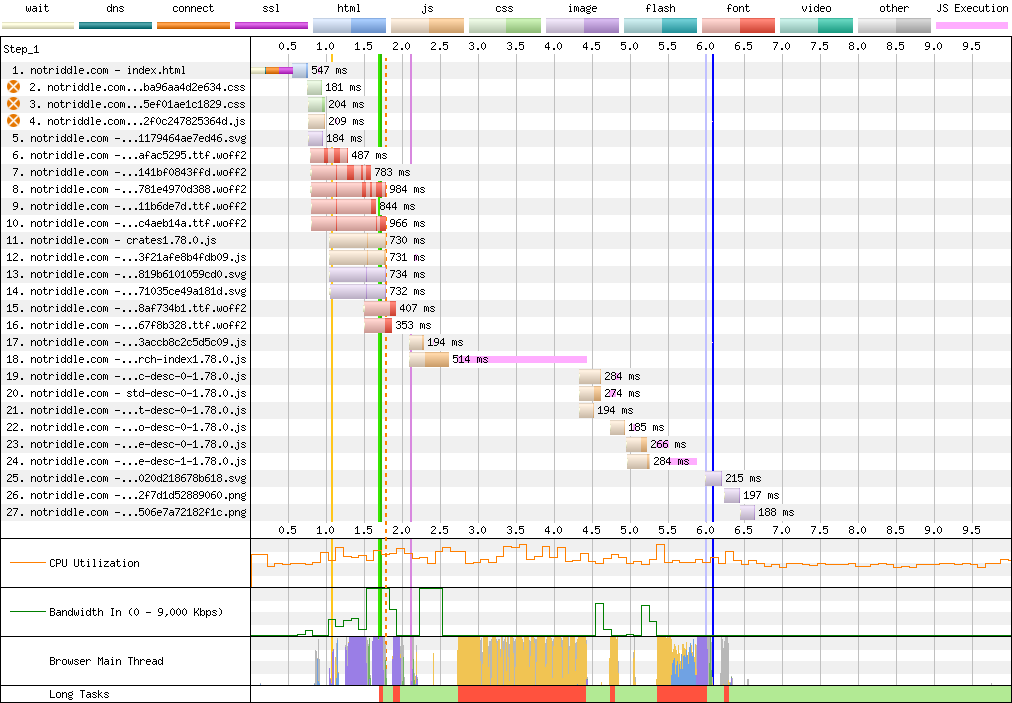
WebPageTest Comparison with before branch on a sort of worst case (searching `vec`, winds up downloading most of the shards anyway): <https://www.webpagetest.org/video/compare.php?tests=240317_AiDc61_2EM,240317_AiDcM0_2EN>
Waterfall diagram:
</details>
Preview: <http://notriddle.com/rustdoc-html-demo-10/doc2/std/index.html?search=vec>
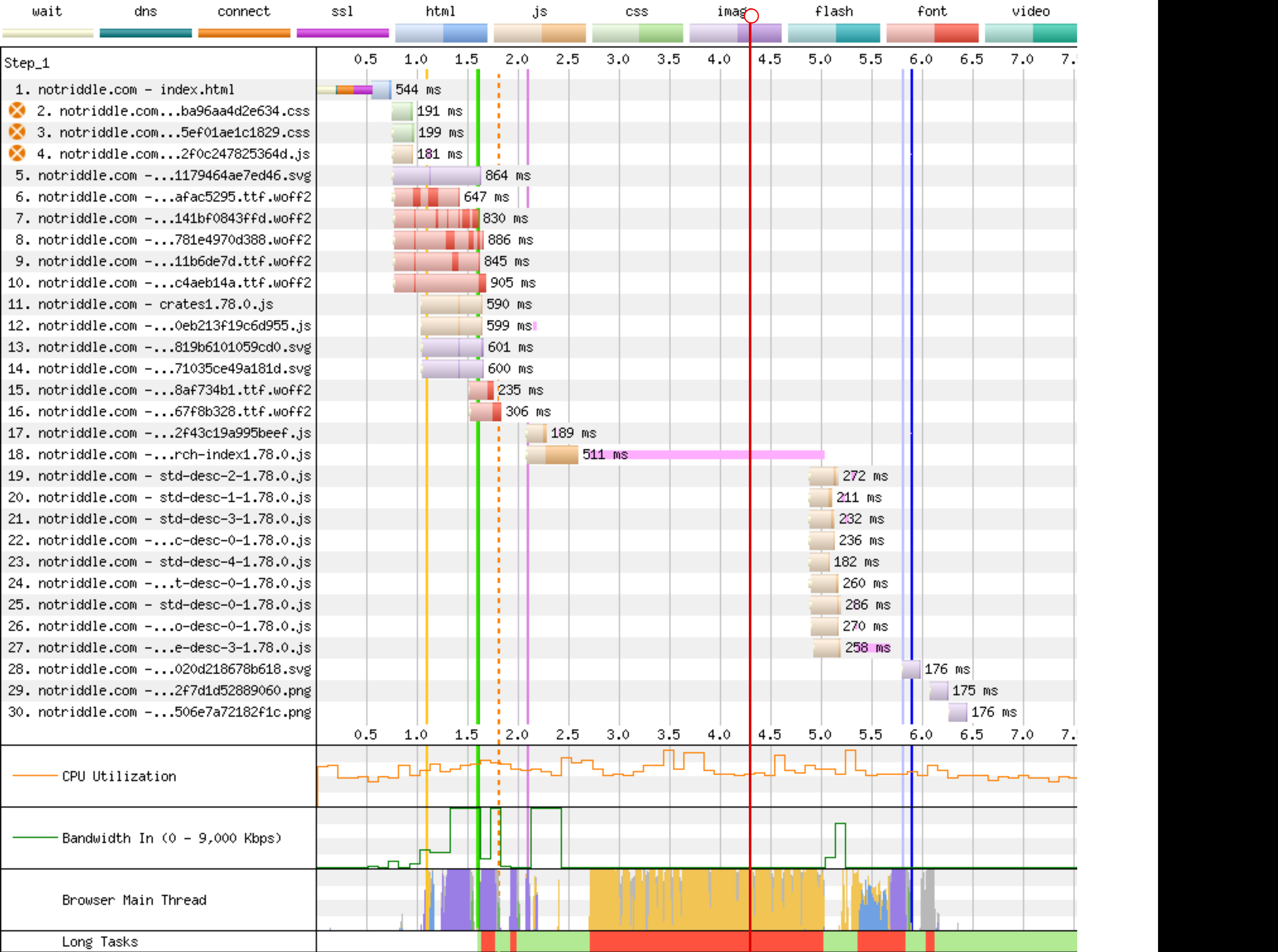
WebPageTest Comparison with before branch on a sort of worst case (searching `vec`, winds up downloading most of the shards anyway): <https://www.webpagetest.org/video/compare.php?tests=240322_BiDcCH_13R,240322_AiDcJY_104>
## Description
r? `@GuillaumeGomez`
The descriptions are, on almost all crates[^1], the majority of the size of the search index, even though they aren't really used for searching. This makes it relatively easy to separate them into their own files.
Additionally, this PR pulls out information about whether there's a description into a bitmap. This allows us to sort, truncate, *then* download.
This PR also bumps us to ES8. Out of the browsers we support, all of them support async functions according to caniuse.
https://caniuse.com/async-functions
[^1]:
<https://microsoft.github.io/windows-docs-rs/>, a crate with
44MiB of pure names and no descriptions for them, is an outlier
and should not be counted. But this PR should improve it, by replacing a long line of empty strings with a compressed bitmap with a single Run section. Just not very much.
## Detailed sizes
```console
$ cat test.sh
set -ex
cp ../search-index*.js search-index.js
awk 'FNR==NR {a++;next} FNR<a-3' search-index.js{,} | awk 'NR>1 {gsub(/\],\\$/,""); gsub(/^\["[^"]+",/,""); print} {next}' | sed -E "s:\\\\':':g" > search-index.json
jq -c '.t' search-index.json > t.json
jq -c '.n' search-index.json > n.json
jq -c '.q' search-index.json > q.json
jq -c '.D' search-index.json > D.json
jq -c '.e' search-index.json > e.json
jq -c '.i' search-index.json > i.json
jq -c '.f' search-index.json > f.json
jq -c '.c' search-index.json > c.json
jq -c '.p' search-index.json > p.json
jq -c '.a' search-index.json > a.json
du -hs t.json n.json q.json D.json e.json i.json f.json c.json p.json a.json
$ bash test.sh
+ cp ../search-index1.78.0.js search-index.js
+ awk 'FNR==NR {a++;next} FNR<a-3' search-index.js search-index.js
+ awk 'NR>1 {gsub(/\],\\$/,""); gsub(/^\["[^"]+",/,""); print} {next}'
+ sed -E 's:\\'\'':'\'':g'
+ jq -c .t search-index.json
+ jq -c .n search-index.json
+ jq -c .q search-index.json
+ jq -c .D search-index.json
+ jq -c .e search-index.json
+ jq -c .i search-index.json
+ jq -c .f search-index.json
+ jq -c .c search-index.json
+ jq -c .p search-index.json
+ jq -c .a search-index.json
+ du -hs t.json n.json q.json D.json e.json i.json f.json c.json p.json a.json
64K t.json
800K n.json
8.0K q.json
4.0K D.json
16K e.json
192K i.json
544K f.json
4.0K c.json
36K p.json
20K a.json
```
These are, roughly, the size of each section in the standard library (this tool actually excludes libtest, for parsing-json-with-awk reasons, but libtest is tiny so it's probably not important).
t = item type, like "struct", "free fn", or "type alias". Since one byte is used for every item, this implies that there are approximately 64 thousand items in the standard library.
n = name, and that's now the largest section of the search index with the descriptions removed from it
q = parent *module* path, stored parallel to the items within
D = the size of each description shard, stored as vlq hex numbers
e = empty description bit flags, stored as a roaring bitmap
i = parent *type* index as a link into `p`, stored as decimal json numbers; used only for associated types; might want to switch to vlq hex, since that's shorter, but that would be a separate pr
f = function signature, stored as lists of lists that index into `p`
c = deprecation flag, stored as a roaring bitmap
p = parent *type*, stored separately and linked into from `i` and `f`
a = alias, as [[key, value]] pairs
## Search performance
http://notriddle.com/rustdoc-html-demo-11/perf-shard/index.html
For example, in stm32f4:
<table><thead><tr><th>before<th>after</tr></thead>
<tbody><tr><td>
```
Testing T -> U ... in_args = 0, returned = 0, others = 200
wall time = 617
Testing T, U ... in_args = 0, returned = 0, others = 200
wall time = 198
Testing T -> T ... in_args = 0, returned = 0, others = 200
wall time = 282
Testing crc32 ... in_args = 0, returned = 0, others = 0
wall time = 426
Testing spi::pac ... in_args = 0, returned = 0, others = 0
wall time = 673
```
</td><td>
```
Testing T -> U ... in_args = 0, returned = 0, others = 200
wall time = 716
Testing T, U ... in_args = 0, returned = 0, others = 200
wall time = 207
Testing T -> T ... in_args = 0, returned = 0, others = 200
wall time = 289
Testing crc32 ... in_args = 0, returned = 0, others = 0
wall time = 418
Testing spi::pac ... in_args = 0, returned = 0, others = 0
wall time = 687
```
</td></tr><tr><td>
```
user: 005.345 s
sys: 002.955 s
wall: 006.899 s
child_RSS_high: 583664 KiB
group_mem_high: 557876 KiB
```
</td><td>
```
user: 004.652 s
sys: 000.565 s
wall: 003.865 s
child_RSS_high: 538696 KiB
group_mem_high: 511724 KiB
```
</td></tr>
</table>
This perf tester is janky and unscientific enough that the apparent differences might just be noise. If it's not an order of magnitude, it's probably not real.
## Future possibilities
* Currently, results are not shown until the descriptions are downloaded. Theoretically, the description-less results could be shown. But actually doing that, and making sure it works properly, would require extra work (we have to be careful to avoid layout jumps).
* More than just descriptions can be sharded this way. But we have to be careful to make sure the size wins are worth the round trips. Ideally, data that’s needed only for display should be sharded while data needed for search isn’t.
* [Full text search](https://internals.rust-lang.org/t/full-text-search-for-rustdoc-and-doc-rs/20427) also needs this kind of infrastructure. A good implementation might store a compressed bloom filter in the search index, then download the full keyword in shards. But, we have to be careful not just of the amount readers have to download, but also of the amount that [publishers](https://gist.github.com/notriddle/c289e77f3ed469d1c0238d1d135d49e1) have to store.


