Correctly handle inlining of doc hidden foreign items
Fixes#123435.
In case a foreign item has doc(hidden) attribute, we simply merged its attributes with the re-export's, making it being removed once in the `strip_hidden` pass.
The solution was to use the same as for local reexported items: merge attributes, but not some of them (like `doc(hidden)`).
I originally checked if we could simply update `Item::is_doc_hidden` method to use `self.inline_stmt_id.is_some_and(|def_id| tcx.is_doc_hidden(def_id))` but unfortunately, it added (local) items that shouldn't be inlined. At least it unifies local and foreign items inlining, which I think is the best course of action here.
r? `@notriddle`
According to <https://caniuse.com/?search=svg%20favicon>,
SVG favicons are supported in everything but Safari.

When I actually try it in Safari, it's downloading all
three favicons, and nothing looks different when I disable
the 16x16 one.

<https://dev.to/masakudamatsu/favicon-nightmare-how-to-maintain-sanity-3al7>,
which is linked from caniuse above, recommends an ico.
However, the reason they recommend it is the apps that
only support /favicon.ico exactly, and rustdoc can't assume
it will be installed to the site root, so it's unfortunately
up to the webmaster to make sure it's set up.
rustdoc: synthetic auto: filter out clauses from the implementor's ParamEnv

... not just the elaborated clauses.

Fixes another regression introduced by me in #123340, oops!
Fixes https://github.com/rust-lang/rust/pull/123340#issuecomment-2034195786, cc ``@tamird.``

An earlier local iteration of branch `rustdoc-simplify-auto-trait-impl-synth` (PR #123340) contained a fix for issue #111101 before I decided to limit the scope. I must've introduced this bug when manually reverting that part of the code.

r? ``@GuillaumeGomez`` or rustdoc
rustdoc: slightly clean up the synthesis of blanket impls

Small follow-up to #123340 as promised in https://github.com/rust-lang/rust/pull/123340#discussion_r1546918604. No functional changes whatsoever.

* inline the over-engineered “type namespace” (struct) `BlanketImplFinder` just like I did with `AutoTraitFinder` in #123340
* use the new `synthesize_*` terminology over the old nondescript / misleading `get_*` one
* inline a `use super::*;` (not super modular, lead to `clean/mod.rs` (!) accumulating cruft)
* use `tracing` properly

r? GuillaumeGomez or rustdoc
Add aarch64-apple-visionos and aarch64-apple-visionos-sim tier 3 targets

Introduces `aarch64-apple-visionos` and `aarch64-apple-visionos-sim` as tier 3 targets. This allows native development for the Apple Vision Pro's visionOS platform.

This work has been tracked in https://github.com/rust-lang/compiler-team/issues/642. There is a corresponding `libc` change https://github.com/rust-lang/libc/pull/3568 that is not required for merge.

Ideally we would be able to incorporate [this change](https://github.com/gimli-rs/object/pull/626) to the `object` crate, but the author has stated that a release will not be cut for quite a while. Therefore, the two locations that would reference the xrOS constant from `object` are hardcoded to their MachO values of 11 and 12, accompanied by TODOs to mark the code as needing change. I am open to suggestions on what to do here to get this checked in.

# Tier 3 Target Policy

At this tier, the Rust project provides no official support for a target, so we place minimal requirements on the introduction of targets.

> A tier 3 target must have a designated developer or developers (the "target maintainers") on record to be CCed when issues arise regarding the target. (The mechanism to track and CC such developers may evolve over time.)

See [src/doc/rustc/src/platform-support/apple-visionos.md](e88379034a/src/doc/rustc/src/platform-support/apple-visionos.md)

> Targets must use naming consistent with any existing targets; for instance, a target for the same CPU or OS as an existing Rust target should use the same name for that CPU or OS. Targets should normally use the same names and naming conventions as used elsewhere in the broader ecosystem beyond Rust (such as in other toolchains), unless they have a very good reason to diverge. Changing the name of a target can be highly disruptive, especially once the target reaches a higher tier, so getting the name right is important even for a tier 3 target.
> * Target names should not introduce undue confusion or ambiguity unless absolutely necessary to maintain ecosystem compatibility. For example, if the name of the target makes people extremely likely to form incorrect beliefs about what it targets, the name should be changed or augmented to disambiguate it.
> * If possible, use only letters, numbers, dashes and underscores for the name. Periods (.) are known to cause issues in Cargo.

This naming scheme matches `$ARCH-$VENDOR-$OS-$ABI` which is matches the iOS Apple Silicon simulator (`aarch64-apple-ios-sim`) and other Apple targets.

> Tier 3 targets may have unusual requirements to build or use, but must not
  create legal issues or impose onerous legal terms for the Rust project or for
  Rust developers or users.
>  - The target must not introduce license incompatibilities.
>  - Anything added to the Rust repository must be under the standard Rust license (`MIT OR Apache-2.0`).
>  - The target must not cause the Rust tools or libraries built for any other host (even when supporting cross-compilation to the target) to depend on any new dependency less permissive than the Rust licensing policy. This applies whether the dependency is a Rust crate that would require adding new license exceptions (as specified by the `tidy` tool in the rust-lang/rust repository), or whether the dependency is a native library or binary. In other words, the introduction of the target must not cause a user installing or running a version of Rust or the Rust tools to besubject to any new license requirements.
>  - Compiling, linking, and emitting functional binaries, libraries, or other code for the target (whether hosted on the target itself or cross-compiling from another target) must not depend on proprietary (non-FOSS) libraries. Host tools built for the target itself may depend on the ordinary runtime libraries supplied by the platform and commonly used by other applications built for the target, but those libraries must not be required for code generation for the target; cross-compilation to the target must not require such libraries at all. For instance, `rustc` built for the target may depend on a common proprietary C runtime library or console output library, but must not depend on a proprietary code generation library or code optimization library. Rust's license permits such combinations, but the Rust project has no interest in maintaining such combinations within the scope of Rust itself, even at tier 3.
> - "onerous" here is an intentionally subjective term. At a minimum, "onerous" legal/licensing terms include but are *not* limited to: non-disclosure requirements, non-compete requirements, contributor license agreements (CLAs) or equivalent, "non-commercial"/"research-only"/etc terms, requirements conditional on the employer or employment of any particular Rust developers, revocable terms, any requirements that create liability for the Rust project or its developers or users, or any requirements that adversely affect the livelihood or prospects of the Rust project or its developers or users.

This contribution is fully available under the standard Rust license with no additional legal restrictions whatsoever. This PR does not introduce any new dependency less permissive than the Rust license policy.

The new targets do not depend on proprietary libraries.

> Tier 3 targets should attempt to implement as much of the standard libraries as possible and appropriate (core for most targets, alloc for targets that can support dynamic memory allocation, std for targets with an operating system or equivalent layer of system-provided functionality), but may leave some code unimplemented (either unavailable or stubbed out as appropriate), whether because the target makes it impossible to implement or challenging to implement. The authors of pull requests are not obligated to avoid calling any portions of the standard library on the basis of a tier 3 target not implementing those portions.

This new target mirrors the standard library for watchOS and iOS, with minor divergences.

> The target must provide documentation for the Rust community explaining how to build for the target, using cross-compilation if possible. If the target supports running binaries, or running tests (even if they do not pass), the documentation must explain how to run such binaries or tests for the target, using emulation if possible or dedicated hardware if necessary.

Documentation is provided in [src/doc/rustc/src/platform-support/apple-visionos.md](e88379034a/src/doc/rustc/src/platform-support/apple-visionos.md)

> Neither this policy nor any decisions made regarding targets shall create any binding agreement or estoppel by any party. If any member of an approving Rust team serves as one of the maintainers of a target, or has any legal or employment requirement (explicit or implicit) that might affect their decisions regarding a target, they must recuse themselves from any approval decisions regarding the target's tier status, though they may otherwise participate in discussions.
> * This requirement does not prevent part or all of this policy from being cited in an explicit contract or work agreement (e.g. to implement or maintain support for a target). This requirement exists to ensure that a developer or team responsible for reviewing and approving a target does not face any legal threats or obligations that would prevent them from freely exercising their judgment in such approval, even if such judgment involves subjective matters or goes beyond the letter of these requirements.

> Tier 3 targets must not impose burden on the authors of pull requests, or other developers in the community, to maintain the target. In particular, do not post comments (automated or manual) on a PR that derail or suggest a block on the PR based on a tier 3 target. Do not send automated messages or notifications (via any medium, including via `@)` to a PR author or others involved with a PR regarding a tier 3 target, unless they have opted into such messages.
> * Backlinks such as those generated by the issue/PR tracker when linking to an issue or PR are not considered a violation of this policy, within reason. However, such messages (even on a separate repository) must not generate notifications to anyone involved with a PR who has not requested such notifications.

> Patches adding or updating tier 3 targets must not break any existing tier 2 or tier 1 target, and must not knowingly break another tier 3 target without approval of either the compiler team or the maintainers of the other tier 3 target.
> * In particular, this may come up when working on closely related targets, such as variations of the same architecture with different features. Avoid introducing unconditional uses of features that another variation of the target may not have; use conditional compilation or runtime detection, as appropriate, to let each target run code supported by that target.

I acknowledge these requirements and intend to ensure that they are met.

This target does not touch any existing tier 2 or tier 1 targets and should not break any other targets.
Default to light theme if JS is enabled but not working

It doesn't [fix] #123399 but it allows to reduce the problem:

* if JS is completely disabled, then `noscript.css` will be applied
* if JS failed for any reason, then the light theme will be applied (because `noscript.css` won't be applied)

r? `@notriddle`
with the re-export's, making it being removed once in the `strip_hidden` pass.

The solution was to use the same as for local reexported items: merge attributes,
but not some of them (like `doc(hidden)`).
rustdoc: synthetic auto trait impls: accept unresolved region vars for now
https://github.com/rust-lang/rust/pull/123348#issuecomment-2032494255:
> Right, [in #123340] I've intentionally changed a `vid_map.get(vid).unwrap_or(r)` to a `vid_map[vid]` making rustdoc panic if `rustc::AutoTraitFinder` returns a region inference variable that cannot be resolved because that is really fishy. I can change it back with a `FIXME: investigate` […]. [O]nce I [fully] understand [the arcane] `rustc::AutoTraitFinder` [I] can fix the underlying issue if there's one.
>
> `rustc::AutoTraitFinder` can also return placeholder regions `RePlaceholder` which doesn't seem right either and which makes rustdoc ICE, too (we have a GitHub issue for that already[, namely #120606]).
Fixes#123370.
Fixes#112242.
r? ``@GuillaumeGomez``
rustdoc-search: shard the search result descriptions
## Preview
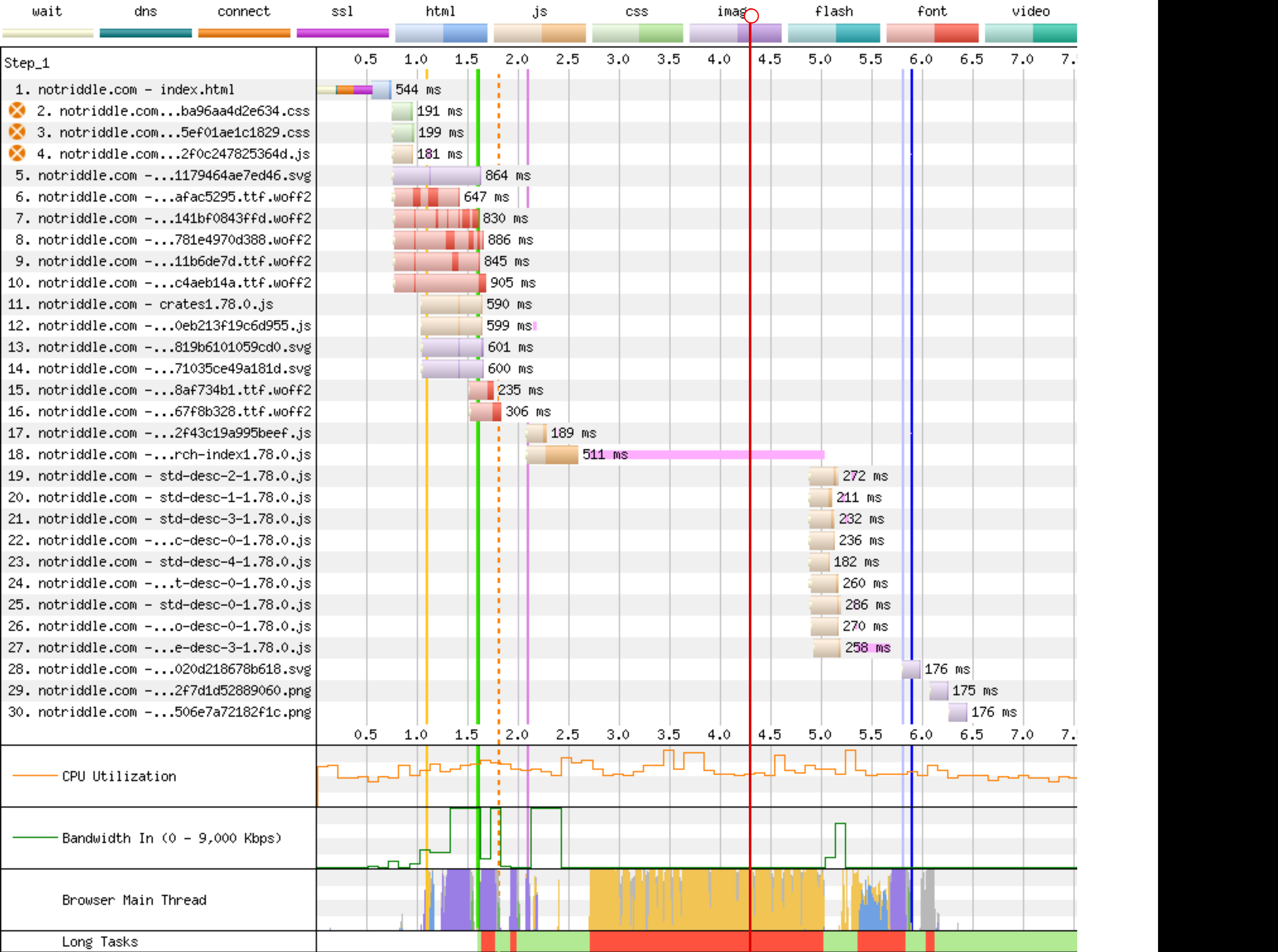
This makes no visual changes to rustdoc search. It's a pure perf improvement.
<details><summary>old</summary>
Preview: <http://notriddle.com/rustdoc-html-demo-10/doc/std/index.html?search=vec>
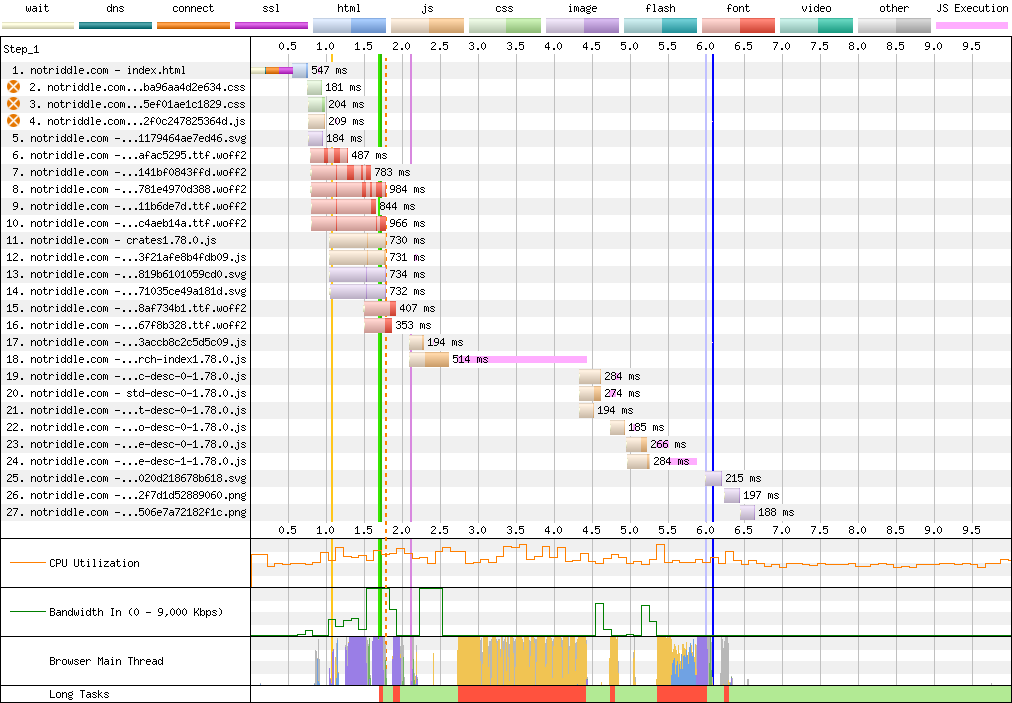
WebPageTest Comparison with before branch on a sort of worst case (searching `vec`, winds up downloading most of the shards anyway): <https://www.webpagetest.org/video/compare.php?tests=240317_AiDc61_2EM,240317_AiDcM0_2EN>
Waterfall diagram:
</details>
Preview: <http://notriddle.com/rustdoc-html-demo-10/doc2/std/index.html?search=vec>
WebPageTest Comparison with before branch on a sort of worst case (searching `vec`, winds up downloading most of the shards anyway): <https://www.webpagetest.org/video/compare.php?tests=240322_BiDcCH_13R,240322_AiDcJY_104>
## Description
r? `@GuillaumeGomez`
The descriptions are, on almost all crates[^1], the majority of the size of the search index, even though they aren't really used for searching. This makes it relatively easy to separate them into their own files.
Additionally, this PR pulls out information about whether there's a description into a bitmap. This allows us to sort, truncate, *then* download.
This PR also bumps us to ES8. Out of the browsers we support, all of them support async functions according to caniuse.
https://caniuse.com/async-functions
[^1]:
<https://microsoft.github.io/windows-docs-rs/>, a crate with
44MiB of pure names and no descriptions for them, is an outlier
and should not be counted. But this PR should improve it, by replacing a long line of empty strings with a compressed bitmap with a single Run section. Just not very much.
## Detailed sizes
```console
$ cat test.sh
set -ex
cp ../search-index*.js search-index.js
awk 'FNR==NR {a++;next} FNR<a-3' search-index.js{,} | awk 'NR>1 {gsub(/\],\\$/,""); gsub(/^\["[^"]+",/,""); print} {next}' | sed -E "s:\\\\':':g" > search-index.json
jq -c '.t' search-index.json > t.json
jq -c '.n' search-index.json > n.json
jq -c '.q' search-index.json > q.json
jq -c '.D' search-index.json > D.json
jq -c '.e' search-index.json > e.json
jq -c '.i' search-index.json > i.json
jq -c '.f' search-index.json > f.json
jq -c '.c' search-index.json > c.json
jq -c '.p' search-index.json > p.json
jq -c '.a' search-index.json > a.json
du -hs t.json n.json q.json D.json e.json i.json f.json c.json p.json a.json
$ bash test.sh
+ cp ../search-index1.78.0.js search-index.js
+ awk 'FNR==NR {a++;next} FNR<a-3' search-index.js search-index.js
+ awk 'NR>1 {gsub(/\],\\$/,""); gsub(/^\["[^"]+",/,""); print} {next}'
+ sed -E 's:\\'\'':'\'':g'
+ jq -c .t search-index.json
+ jq -c .n search-index.json
+ jq -c .q search-index.json
+ jq -c .D search-index.json
+ jq -c .e search-index.json
+ jq -c .i search-index.json
+ jq -c .f search-index.json
+ jq -c .c search-index.json
+ jq -c .p search-index.json
+ jq -c .a search-index.json
+ du -hs t.json n.json q.json D.json e.json i.json f.json c.json p.json a.json
64K t.json
800K n.json
8.0K q.json
4.0K D.json
16K e.json
192K i.json
544K f.json
4.0K c.json
36K p.json
20K a.json
```
These are, roughly, the size of each section in the standard library (this tool actually excludes libtest, for parsing-json-with-awk reasons, but libtest is tiny so it's probably not important).
t = item type, like "struct", "free fn", or "type alias". Since one byte is used for every item, this implies that there are approximately 64 thousand items in the standard library.
n = name, and that's now the largest section of the search index with the descriptions removed from it
q = parent *module* path, stored parallel to the items within
D = the size of each description shard, stored as vlq hex numbers
e = empty description bit flags, stored as a roaring bitmap
i = parent *type* index as a link into `p`, stored as decimal json numbers; used only for associated types; might want to switch to vlq hex, since that's shorter, but that would be a separate pr
f = function signature, stored as lists of lists that index into `p`
c = deprecation flag, stored as a roaring bitmap
p = parent *type*, stored separately and linked into from `i` and `f`
a = alias, as [[key, value]] pairs
## Search performance
http://notriddle.com/rustdoc-html-demo-11/perf-shard/index.html
For example, in stm32f4:
<table><thead><tr><th>before<th>after</tr></thead>
<tbody><tr><td>
```
Testing T -> U ... in_args = 0, returned = 0, others = 200
wall time = 617
Testing T, U ... in_args = 0, returned = 0, others = 200
wall time = 198
Testing T -> T ... in_args = 0, returned = 0, others = 200
wall time = 282
Testing crc32 ... in_args = 0, returned = 0, others = 0
wall time = 426
Testing spi::pac ... in_args = 0, returned = 0, others = 0
wall time = 673
```
</td><td>
```
Testing T -> U ... in_args = 0, returned = 0, others = 200
wall time = 716
Testing T, U ... in_args = 0, returned = 0, others = 200
wall time = 207
Testing T -> T ... in_args = 0, returned = 0, others = 200
wall time = 289
Testing crc32 ... in_args = 0, returned = 0, others = 0
wall time = 418
Testing spi::pac ... in_args = 0, returned = 0, others = 0
wall time = 687
```
</td></tr><tr><td>
```
user: 005.345 s
sys: 002.955 s
wall: 006.899 s
child_RSS_high: 583664 KiB
group_mem_high: 557876 KiB
```
</td><td>
```
user: 004.652 s
sys: 000.565 s
wall: 003.865 s
child_RSS_high: 538696 KiB
group_mem_high: 511724 KiB
```
</td></tr>
</table>
This perf tester is janky and unscientific enough that the apparent differences might just be noise. If it's not an order of magnitude, it's probably not real.
## Future possibilities
* Currently, results are not shown until the descriptions are downloaded. Theoretically, the description-less results could be shown. But actually doing that, and making sure it works properly, would require extra work (we have to be careful to avoid layout jumps).
* More than just descriptions can be sharded this way. But we have to be careful to make sure the size wins are worth the round trips. Ideally, data that’s needed only for display should be sharded while data needed for search isn’t.
* [Full text search](https://internals.rust-lang.org/t/full-text-search-for-rustdoc-and-doc-rs/20427) also needs this kind of infrastructure. A good implementation might store a compressed bloom filter in the search index, then download the full keyword in shards. But, we have to be careful not just of the amount readers have to download, but also of the amount that [publishers](https://gist.github.com/notriddle/c289e77f3ed469d1c0238d1d135d49e1) have to store.
rustdoc: heavily simplify the synthesis of auto trait impls
`gd --numstat HEAD~2 HEAD src/librustdoc/clean/auto_trait.rs`
**+315 -705** 🟩🟥🟥🟥⬛
---
As outlined in issue #113015, there are currently 3[^1] large separate routines that “clean” `rustc_middle::ty` data types related to generics & predicates to rustdoc data types. Every single one has their own kinds of bugs. While I've patched a lot of bugs in each of the routines in the past, it's about time to unify them. This PR is only the first in a series. It completely **yanks** the custom “bounds cleaning” of mod `auto_trait` and reuses the routines found in mod `simplify`. As alluded to, `simplify` is also flawed but it's still more complete than `auto_trait`'s routines. [See also my review comment over at `tests/rustdoc/synthetic_auto/bounds.rs`](https://github.com/rust-lang/rust/pull/123340#discussion_r1546900539).
This is preparatory work for rewriting “bounds cleaning” from scratch in follow-up PRs in order to finally [fix] #113015.
Apart from that, I've eliminated all potential sources of *instability* in the rendered output.
See also #119597. I'm pretty sure this fixes#119597.
This PR does not attempt to fix [any other issues related to synthetic auto trait impls](https://github.com/rust-lang/rust/issues?q=is%3Aissue+is%3Aopen+label%3AA-synthetic-impls%20label%3AA-auto-traits).
However, it's definitely meant to be a *stepping stone* by making `auto_trait` more contributor-friendly.
---
* Replace `FxHash{Map,Set}` with `FxIndex{Map,Set}` to guarantee a stable iteration order
* Or as a perf opt, `UnordSet` (a thin wrapper around `FxHashSet`) in cases where we never iterate over the set.
* Yes, we do make use of `swap_remove` but that shouldn't matter since all the callers are deterministic. It does make the output less “predictable” but it's still better than before. Ofc, I rely on `rustc_infer` being deterministic. I hope that holds.
* Utilizing `clean::simplify` over the custom “bounds cleaning” routines wipes out the last reference to `collect_referenced_late_bound_regions` in rustdoc (`simplify` uses `bound_vars`) which was a source of instability / unpredictability (cc #116388)
* Remove the types `RegionTarget` and `RegionDeps` from `librustdoc`. They were duplicates of the identical types found in `rustc`. Just import them from `rustc`. For some reason, they were duplicated when splitting `auto_trait` in two in #49711.
* Get rid of the useless “type namespace” `AutoTraitFinder` in `librustdoc`
* The struct only held a `DocContext`, it was over-engineered
* Turn the associated functions into free ones
* Eliminates rightward drift; increases legibility
* `rustc` also contains a useless `AutoTraitFinder` struct but I plan on removing that in a follow-up PR
* Rename a bunch of methods to be way more descriptive
* Eliminate `use super::*;`
* Lead to `clean/mod.rs` accumulating a lot of unnecessary imports
* Made `auto_traits` less modular
* Eliminate a custom `TypeFolder`: We can just use the rustc helper `fold_regions` which does that for us
I plan on adding extensive documentation to `librustdoc`'s `auto_trait` in follow-up PRs.
I don't want to do that in this PR because further refactoring & bug fix PRs may alter the overall structure of `librustdoc`'s & `rustc`'s `auto_trait` modules to a great degree. I'm slowly digging into the dark details of `rustc`'s `auto_trait` module again and once I have the full picture I will be able to provide proper docs.
---
While this PR does indeed touch `rustc`'s `auto_trait` — mostly tiny refactorings — I argue this PR doesn't need any compiler reviewers next to rustdoc ones since that module falls under the purview of rustdoc — it used to be part of `librustdoc` after all (#49711).
Sorry for not having split this into more commits. If you'd like me to I can try to split it into more atomic commits retroactively. However, I don't know if that would actually make reviewing easier. I think the best way to review this might just be to place the master version of `auto_trait` on the left of your screen and the patched one on the right, not joking.
r? `@GuillaumeGomez`
[^1]: Or even 4 depending on the way you're counting.
Simplify trim-paths feature by merging all debuginfo options together

This PR simplifies the trim-paths feature by merging all debuginfo options together, as described in https://github.com/rust-lang/rust/issues/111540#issuecomment-1994010274.

And also do some correctness fixes found during the review.

cc `@weihanglo`
r? `@michaelwoerister`
Correctly get complete intra-doc link data

Fixes https://github.com/rust-lang/rust/issues/123158.

The problem was that we didn't take into account cases where there would be content other than backticks into the intra doc link definition.

r? `@notriddle`
Previously, the documentation for a variant appeared after the documentation
for each of its fields. This was inconsistent with structs and unions, and made
little sense on its own; fields are subordinate to variants and should
therefore appear later in the documentation.
`rustdoc --test`: Prevent reaching the maximum size of command-line by using files for arguments if there are too many
Fixes#122722.
Thanks to this I discovered that rust was using ``@`` to add arguments from a file, quite convenient.
If there are too many `cfg` arguments given to `rustdoc --test`, it'll now put them into a temporary file and passing it as argument to the rustc command.
I added a test with 100_000 `cfg` arguments to ensure it'll not break again.
r? `@notrid`


